
When to Teach the Plyo Step and How to Teach It?
Let’s revisit a concept I have spoken about for more years than I can remember….
I still receive questions from coaches and trainers about “when to teach and how to teach the Plyo Step?” My answer is always the same, “you don’t have to teach it, and it should be occurring during each workout- naturally”.
The Plyo Step and Hip Turn are movements that I have “endorsed” for years. By endorsing them, I want both the Plyo Step and Hip Turn to occur, and I don’t try to stop them. Many coaches still call it a “False Step”. Which is dead wrong. If it were a true step the athlete would actually travel backward with the hips and this does NOT occur.
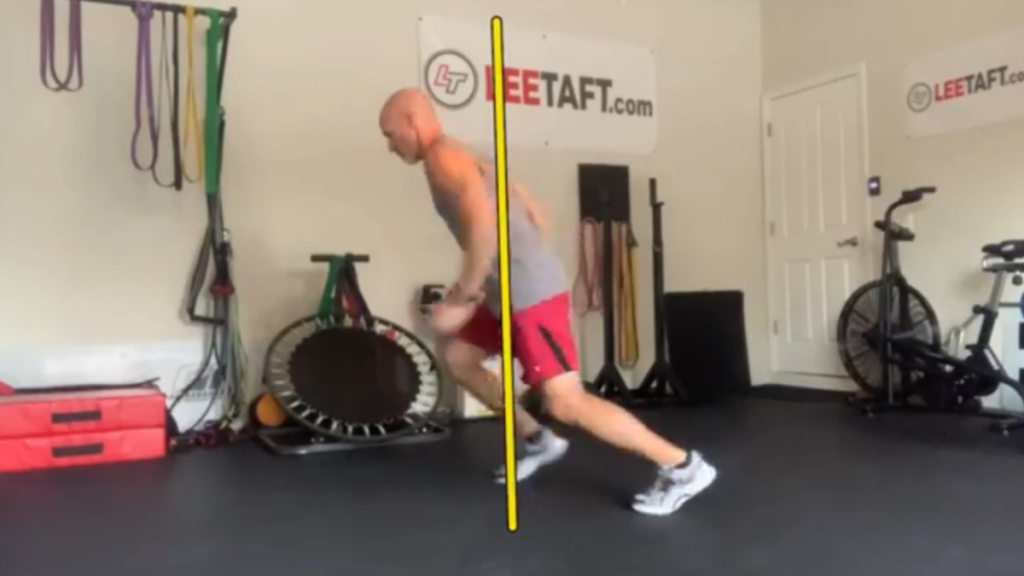
To prove this is simple. All you have to do is line your athletes up in a parallel stance or even an active bouncing stance. Tell them to race to a line 5-10 yards in front. You will see all perform the Plyo Step. The reason is that the body is attempting to find a more natural, powerful push-off angle to accelerate the body quickly. It just happens!
See what I mean…
The teaching comes in when you see the athlete drop or raise the shoulders, causing a lesser power line through the body. If the shoulders rise up too much, it is called rearing up. If the shoulders drop too much, it is called… bending over.
In either case, you, as the coach, have to teach them to create a nice acceleration angle. There are some other coaching points…to learn tons about this concept and more, check out Ground Breaking 2.
Some things you have to roll up your sleeves for, and others have a way of working out on their own. The Plyo Step is one of those things. You really don’t teach it; you simply clean up the sloppy movements that accompany it.