
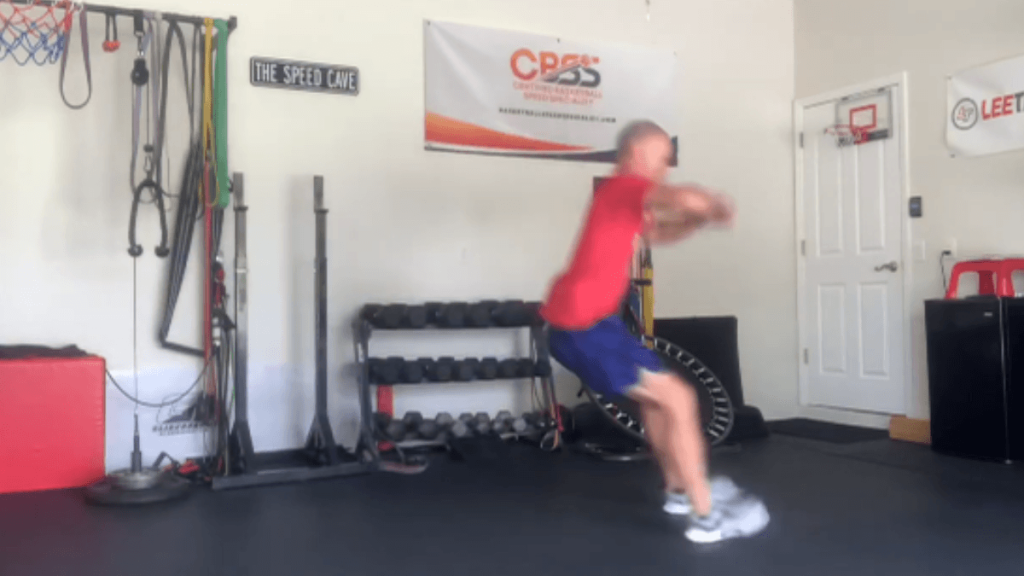
Jumping & Landing in Sports: How to Teach Safe and Effective Mechanics for Real Game Speed?
Direct Answer
The safest and most effective way to teach jumping and landing depends on the direction. Vertical jumps should land on the ball of the foot first, allowing force absorption through the ankle, knee, and hip. Horizontal or forward jumps should land with the heel first, allowing the body to safely decelerate before transitioning into an athletic position.
Understanding this difference is critical for performance, injury reduction, and true game transfer.
Why Jumping Is a Foundational Movement Pattern
Jumping is one of the most important movement patterns in sport. In basketball and many other athletic environments, athletes must elevate, absorb force, reposition, and prepare for the next action. But jumping is not just one skill. It has multiple expressions.
An athlete can jump vertically or horizontally. They can leap from one foot to the other, hop off the same leg, jump laterally, rotate in the air, and land from different angles. That is why coaches must understand the basic pattern of jumping and landing before layering on more advanced variations.
If a coach does not understand the context of the jump, they will often teach the wrong landing strategy. And if the wrong landing strategy is coached, performance drops and risk rises.
The Key Difference Between Vertical and Horizontal Landings
The direction of the jump determines the landing mechanics. This is where many coaches oversimplify what should be a more precise conversation.
Vertical Jump Landing: Absorbing Gravity
When an athlete jumps straight up and comes down mostly in line with gravity, the goal is to absorb force as effectively as possible. The best way to do that is to land toward the ball of the foot, not on the tips of the toes, but on the joint area just below the big toe.
This allows the body to begin slowing down through the muscles that support the ankle joint. That force is then transferred upward as the knee flexes and the hips load. In other words, the body absorbs force through a coordinated chain: foot, ankle, knee, and hip.
From the front view, the athlete should land and absorb while maintaining sound joint alignment. There may be slight inward or outward movement, and while coaches want to minimize excessive collapse, a small amount of inward motion is not automatically bad. In fact, a little internal rotation can help load the hips well and prepare the body for the next explosive action. The key is to avoid letting that motion become uncontrolled.
Horizontal Jump Landing: Managing Forward Momentum
When an athlete jumps forward, everything changes. Now they are not just fighting gravity. They are also managing momentum moving in front of them.
In this situation, landing on the ball of the foot is not the safest choice. If the athlete jumps out with speed and lands forefoot-first while moving forward, the ankle joint is more open and vulnerable to rolling. The foot has a harder time controlling that incoming force, the knee can drive forward too quickly, and the upper body can be pulled down and ahead of the base of support. That makes the landing unstable and potentially dangerous.
The better solution is to land heel first with the shin facing forward. This gives the athlete a braking mechanism. The foot is now placed farther in front, allowing the ankle, knee, and hip to load together and safely decelerate the body. After that initial contact, the athlete can finish into the ball of the foot and return to a strong athletic stance.
The Coaching Mistake Most People Make
One of the most common mistakes in coaching is using one landing cue for every jump. Telling athletes to always land on the balls of their feet ignores the direction of force.
That cue may work well for vertical jumping, where the athlete is primarily absorbing gravity straight down. But it becomes a poor cue for horizontal jumping, where forward momentum must be managed with control. Coaches must teach athletes to match the landing strategy to the type of jump they are performing.
This is not just about preference. It is about understanding how the body handles force in real sport situations.
Why This Matters for Performance and Injury Reduction
Landing mechanics are not separate from performance. They are part of performance. A poor landing position compromises deceleration, reduces balance, delays repositioning, and increases stress on the ankle, knee, and hip.
A well-taught landing gives athletes a safer and more efficient way to absorb force, control their bodies, and prepare for the next action. That means better movement quality, more confidence, and stronger transfer to the game.
In other words, jumping is not just about leaving the ground. It is about what happens when the athlete comes back down.
How Coaches Can Teach It More Effectively
A simple way to coach this is to start with one question: Is the athlete jumping mostly vertical or mostly horizontal?
- For vertical jumps, coach ball-of-foot contact first to absorb gravity through the ankle, knee, and hip.
- For horizontal jumps, coach heel-first contact to slow forward momentum safely before transitioning back into an athletic position.
- In both cases, focus on controlled force absorption and sound alignment rather than rigid positions.
Once athletes understand these two basic patterns, coaches can then add more advanced variations such as lateral jumps, rotational jumps, leaps, hops, and multi-directional landing tasks.
How This Fits Into the Bigger Speed Model
Jumping and landing are not isolated skills. They directly relate to deceleration, changes of direction, and reactive movement. If coaches want athletes to move better in sport, they need to understand how force is absorbed before it is redirected.
That is why landing mechanics should be coached as part of a larger movement system, not as a stand-alone drill. The better the athlete can absorb force, the better they can control the next movement.
FAQ
Should athletes always land on the balls of their feet?
No. That is appropriate for vertical jumps, but not for forward or horizontal jumps. Horizontal jumps should be taught with a heel-first landing to allow the athlete to control forward momentum safely.
Why is heel-first landing safer in a forward jump?
Because it gives the body a braking strategy. It allows the ankle, knee, and hip to load together, helping the athlete decelerate rather than being pulled forward uncontrollably.
Is slight inward knee movement always bad when landing?
No. A small amount of inward motion can help load the hips and create a useful chain of internal rotation. The goal is not zero motion. The goal is controlled motion.
Why does jump direction matter so much?
Because the body is dealing with different forces. Vertical jumps primarily involve absorbing gravity, whereas horizontal jumps require the athlete to manage both gravity and forward momentum.
How does this help coaches in real sport settings?
It gives coaches a more accurate way to teach athletes how to land, decelerate, and prepare for the next movement. That improves performance and supports safer game-speed mechanics.
Key Takeaways
- Jumping is a foundational movement pattern in sport.
- Landing mechanics must match the direction of the jump.
- Vertical jumps should use ball-of-foot contact first.
- Horizontal jumps should use heel-first contact.
- Coaches must understand force absorption, not just repeat generic landing cues.
- Better landing mechanics improve both safety and performance.
Next Steps
If you want to coach jumping, landing, deceleration, and real game-speed movement at a deeper level, you need more than drills. You need a system.
That is exactly what I teach in my inside Speed Insiders 24-Module Course. If you want your coaches to better understand how athletes absorb force, redirect momentum, and move more efficiently in sport, explore here, Speed Insiders.