
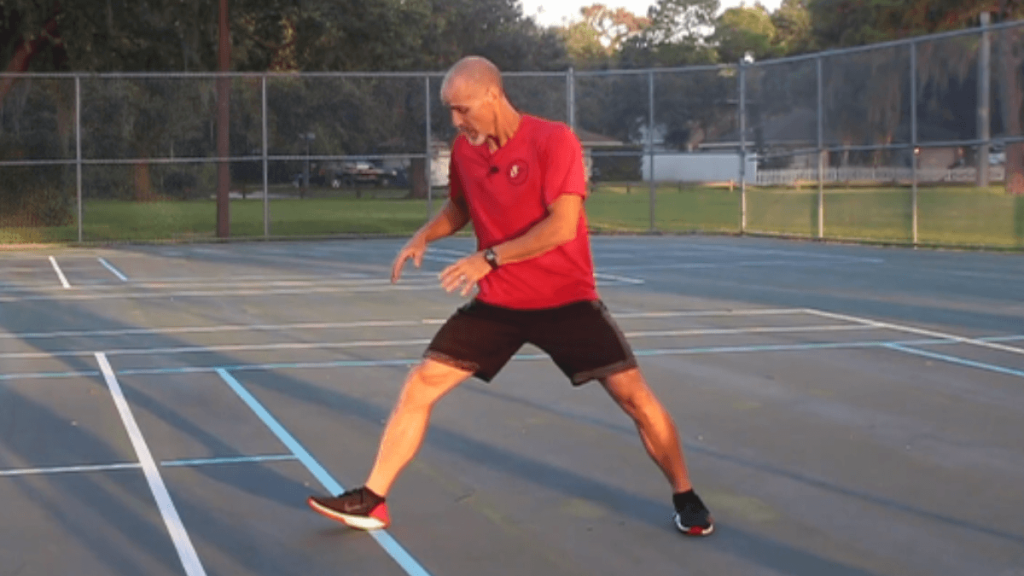
Lateral Shuffle Mechanics: How to Coach Faster, More Stable Defensive Movement
The Lateral Shuffle is a push-pull movement pattern where the backside leg drives the body laterally, and the front leg reaches, contacts the ground, and pulls the body into position. Effective shuffling requires backside force production, front-side stability, proper foot angle, and continuous momentum—not isolated pulling from a dead position.
Why the Lateral Shuffle Is Misunderstood by Coaches
Most coaches teach the Lateral Shuffle as “just move your feet faster.”
That’s the problem.
The Lateral Shuffle is not just a foot-speed drill. It is a force application strategy. If you do not understand where force is created, how momentum is managed, and which muscles are actually responsible, you end up with athletes who look busy but move slow.
The Real Mechanics of the Lateral Shuffle
1. It Starts With a Backside Push
The engine of the shuffle is the back leg.
- The backside leg pushes down and away
- This creates lateral momentum
- Without this push, nothing else works
Key principle: You cannot pull your body effectively without first creating movement.
2. The Front Leg Is a Timed Pull…Not a Starter
Once momentum is created, the front leg reaches out, makes ground contact, and then pulls the body underneath.
But this is where many coaches get it wrong.
- Wrong: Trying to pull from a dead stop
- Right: Pulling only after momentum already exists
This reduces stress on the hamstrings and glutes and allows those muscles to work with momentum instead of against it.
3. Why Heel Contact Matters
When the front foot lands, slight heel contact improves stability and helps organize the pull.
- It connects well into the hamstrings
- It gives support through the glutes
- It provides additional stability through the calf
If athletes land too far forward on the ball of the foot, they increase instability and create more potential for unwanted pivoting and rotation. If they stay flat-footed but poorly aligned, they often rely too much on the groin and adductors, which are better at supporting and stabilizing than driving fast movement.
The Most Overlooked Detail: Foot Position
External Rotation Is Not a Flaw…It’s a Feature
In a quality lateral shuffle, the front foot will often turn slightly outward. That is not bad mechanics. It is part of good mechanics.
This slight external rotation helps:
- Reduce unnecessary stress at the knee and groin
- Improve force direction
- Create more stride length laterally
Over time, it becomes clear that if the front leg does not open naturally, the athlete will likely become slower, less efficient, and potentially more vulnerable to overuse issues.
Why Short, Choppy Steps Hurt Lateral Speed
Many athletes shuffle with quick, short steps and think they are moving faster. In reality, they are just moving more often without gaining enough ground.
Think of it like sprinting. You want forceful action that covers space, not constant stepping that goes nowhere.
The lateral shuffle should follow this pattern:
- Push
- Cover ground
- Recover
- Repeat
Lateral speed depends on distance per step, not just step frequency.
The Injury Risk Coaches Miss
If the front leg stays too perpendicular, does not open, or tries to pull aggressively without momentum, athletes can create extra stress in several areas:
- Groin and adductors
- Knee joint
- Overall stability during defensive movement
Bad mechanics do not just make athletes slower. They can also wear them down over time.
How the Lateral Shuffle Fits Into a Bigger Speed System
The Lateral Shuffle is one of the foundational movement patterns in multi-directional speed development. It connects directly to larger concepts like lateral running, Hip Turns, change of direction, and reactive movement training.
If an athlete cannot create a strong backside push, control momentum, and stabilize the front-side pull, they will struggle with more advanced movement patterns later on.
Coaching Cues That Actually Help
Instead of constantly telling athletes to “move your feet faster,” use cues that match what the body actually needs to do.
- Push the ground away with your back leg
- Reach and pull under control
- Cover ground, do not just step
- Let the foot open naturally
Simple coaching cues are often the most effective when they match the true movement mechanics.
Key Takeaways
- The lateral shuffle is a push-pull sequence, not just a foot-speed exercise
- The back leg creates momentum and the front leg manages it
- Heel contact improves stability and helps organize force transfer
- Slight external foot rotation is necessary for better speed and safer mechanics
- Short, choppy steps reduce efficiency and limit distance covered
- Poor mechanics can increase stress on the groin, knee, and lower body
FAQ
What is the most important part of the Lateral Shuffle?
The most important part is the backside push. Without it, the athlete cannot create the momentum needed for an efficient shuffle.
Should athletes stay on their toes when shuffling?
No. Staying too far forward on the toes can reduce stability and increase unwanted rotation during the movement.
Why does the front foot turn outward during a shuffle?
That slight outward turn helps improve force direction, increase lateral stride length, and reduce unnecessary joint stress.
Is the Lateral Shuffle the fastest way to move laterally?
No. The lateral shuffle is best for shorter distances when the athlete needs to stay square. If more speed is needed, a Lateral Run becomes the better option.
What muscles are most involved in the lateral shuffle?
The backside leg uses the glutes and quads to push. The front side uses the hamstrings and glutes to help manage the pull, while the adductors support stability.
Continue Learning
If you want to go deeper into how movement patterns connect to true game speed, explore more of the full system through Speed Insiders, or bring this teaching directly to your coaches through a hands-on workshop.