
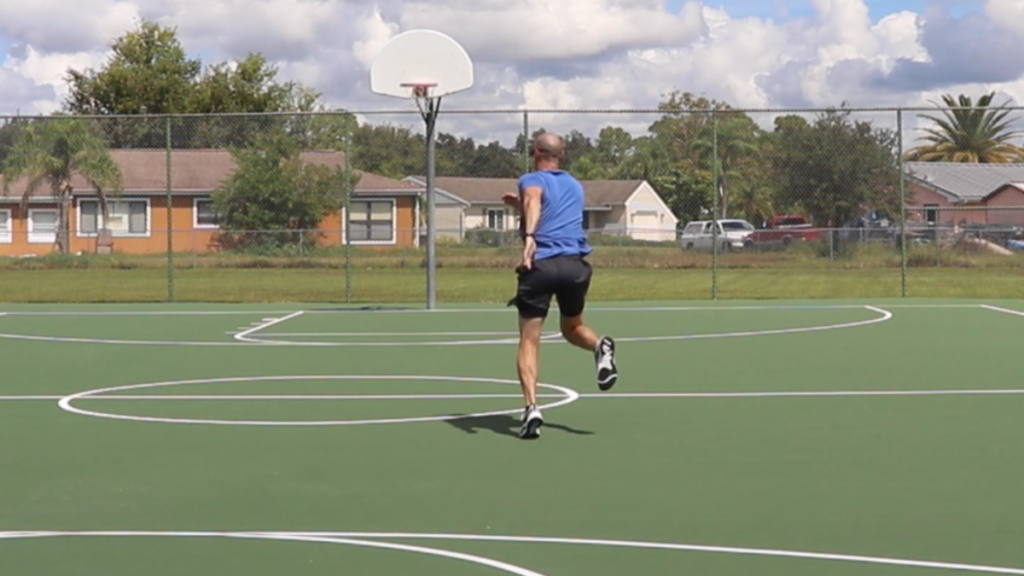
Backpedaling in Sports: Why Every Athlete Must Master This Overlooked Movement Pattern
Backpedaling is a critical movement skill that improves spatial awareness, deceleration, acceleration, and body control in athletes. When taught progressively—from walking to sprinting—it exposes mobility limitations, enhances coordination between the ankle, knee, and hip, and prepares athletes for real-game situations where quick backward movement and transitions are essential.
Why Backpedaling Is One of the Most Undervalued Skills in Sports
Most coaches overlook backpedaling as a trainable skill.
That is a mistake.
Backpedaling shows up in nearly every sport: basketball, soccer, football, tennis, baseball, and more. Yet many athletes only experience it during play, not in training. That creates a gap. And that gap often shows up at the biggest moment of competition.
The breakdown does not usually happen early. It tends to show up on the play that matters most.
The Real Problem: Coaches Avoid Teaching It
Some coaches avoid backpedaling because they think it is unsafe. But the issue is not the movement itself. The issue is how it is taught.
Backpedaling becomes risky when athletes go too fast too soon, when there is no progression, and when mobility limitations are ignored. When taught correctly, it becomes one of the most valuable movement tools in a complete speed system.
How to Teach Backpedaling the Right Way
1. Start With the Compact Walking Backpedal
This is the foundation. It is not about speed. It is about mobility, positioning, and control.
- Toe-foot-ankle sequencing
- Ankle dorsiflexion
- Quadriceps control
- Low, compact posture
This variation exposes limitations in ankle mobility, toe-foot function, and the ability to use the quadriceps in a low backward position. It is both a movement drill and an assessment tool.
2. Progress to a Compact Jog Backward
Once the athlete can control the walking version, progress to a compact backward jog. This adds rhythm and force without losing the positional demands of the compact backpedal.
At this stage, the athlete is still challenging the quadriceps and ankle dorsiflexion while learning to organize the body under more speed.
3. Move to the Tall Extended Backpedal
This is where you begin training true backpedal speed. The athlete opens up into a taller posture and learns how to move backward with better range, smoother gait mechanics, and improved vision.
The tall extended backpedal also reveals how well the ankle joint, gastrocnemius, and hip flexors communicate. If an athlete lacks range in those areas, the movement becomes shortened, stiff, and inefficient.
What Backpedaling Reveals About an Athlete
Backpedaling is one of the best movement assessments you can use because it exposes how the athlete organizes force in a real movement pattern.
- Limited ankle dorsiflexion
- Poor toe-foot-ankle function
- Restricted hip mobility
- Tight gastrocnemius
- External foot rotation
- Excessive pronation
- Valgus stress at the knee
If an athlete steps backward and loses alignment, turns the foot out excessively, or collapses inward, you are seeing a movement problem that may eventually become a performance limitation or an injury issue.
This is why backpedaling is more than a drill. It is a live assessment inside real movement.
Why Backpedaling Matters for Real Game Performance
In sport, backpedaling often plays a short-term role, but that role is incredibly important.
A basketball player may shoot, sprint back, hit a 180 turn, and continue into a tall backpedal to read the floor. A deep safety may backpedal with eyes high to gain vision and make a tactical decision. A tennis player may use it on a lob. A baseball player may use it to locate and track a pop fly.
These moments require more than effort. They require body awareness, spatial awareness, mobility, posture, and timing. If the athlete has not trained the movement, the weakness may not show up in practice. It often shows up on the one play they need most.
Backpedaling Builds Spatial Awareness and Body Awareness
One of the greatest benefits of backpedaling is that it teaches athletes how to organize themselves in a less familiar movement environment.
Most athletes become highly biased toward forward movement. Backpedaling breaks that bias and teaches them where their body is in space as they move backward.
That includes:
- Knowing whether they are leaning too far back
- Knowing whether they are falling too far forward
- Understanding where the hips, shoulders, and limbs are during movement
- Maintaining control while reading play in front of them
This is a major reason backpedaling should be practiced consistently. Like any skill, athletes become comfortable and efficient when they do it often.
The 180 Series and the Tactical Value of Backpedaling
Backpedaling becomes even more valuable when paired with the 180 Series.
In many sports, athletes do not simply start in a backpedal. They turn into it. That transition matters.
Examples include:
- Basketball: sprint back, hit a 180, then backpedal to read transition offense
- Soccer: retreat, turn, and survey the field
- Football: rotate and backpedal with vision
- Baseball: turn, backpedal, locate, catch, and throw
- Tennis: retreat for the lob while maintaining balance and awareness
This is why backpedaling is not an isolated skill. It belongs inside a larger system of movement education.
The Most Important Coaching Point: Body Position Relative to the Vertical Axis
Whether an athlete is moving slowly in a compact backpedal or sprinting backward in a tall extended backpedal, they must understand where their body is relative to the vertical axis.
If the athlete stays too vertical, they tend to drift behind the axis and lose orientation. That is when balance and speed break down.
Instead, the athlete must learn to keep the head slightly in front of vertical. In a tall speed backpedal, that means the head is just slightly forward, closer to 1 o’clock than 12 o’clock. That subtle position helps protect the athlete from falling backward and allows them to maintain speed and posture.
Why This Assessment Matters More Than Traditional Testing
There are many ankle dorsiflexion tests coaches can use. Some are useful. But many are performed in open-chain or highly controlled positions that do not reflect how athletes actually move in sport.
Backpedaling gives you something different. It lets you see how the athlete handles dorsiflexion, force, and posture under body mass, under movement, and under positional demands. That makes it far more functional.
Why Backpedaling Should Be Trained Year-Round
Backpedaling should not be an occasional add-on. It should be part of a warm-up, movement prep period, or speed development system throughout the year.
From young athletes to elite performers, this pattern builds movement literacy, awareness, coordination, and resilience. The progression is what matters. Start slow. Teach position. Gradually build speed. Put athletes on appropriate surfaces. Train it with purpose.
How This Fits Into the Bigger System
Backpedaling is not just one drill. It is one part of a complete model for teaching multidirectional speed.
It connects directly to:
- The 7 Movement Patterns
- The 180 Series
- The Reactive Tier System for Speed
- Movement strategies like the Hip Turn, Plyo Step, and Directional Step
If coaches want to move beyond random drills and truly understand how to teach speed, this is the kind of detail that matters.
FAQ
What is backpedaling in sports?
Backpedaling is a backward movement pattern used in sport so athletes can retreat, reposition, and keep vision on the action in front of them.
Why is backpedaling important for athletes?
Backpedaling improves spatial awareness, body control, mobility, and tactical movement. It also helps athletes transition more effectively in real-game situations.
Is backpedaling safe for young athletes?
Yes, when it is taught progressively. Start with walking, then jogging, then faster variations. The problem is not the movement. The problem is poor progression.
What does backpedaling assess?
It can reveal limitations in ankle dorsiflexion, hip mobility, calf flexibility, foot alignment, and knee control, all within a functional movement pattern.
How does backpedaling fit into speed training?
It is a foundational part of multidirectional speed because it connects mobility, posture, awareness, transition mechanics, and tactical decision-making.
Key Takeaways
- Backpedaling is a trainable movement skill, not just a game reaction
- It exposes movement limitations and injury risks
- It improves spatial awareness and body awareness
- It should be taught progressively, from walk to speed
- It plays a critical role in the 180 Series and real-game movement
- It belongs inside a complete multidirectional speed system
Final Thoughts
If you want to develop athletes who move efficiently, react better, and stay more organized under pressure, you need more than random drills. You need a model.
Backpedaling is one small piece of a much bigger movement system, but it is a piece too many coaches ignore.
When you understand how to teach it, assess it, and connect it to the bigger picture, it becomes one of the most valuable movement tools you have.
If you want to go deeper into the full model of multidirectional speed, movement patterns, and practical teaching strategies, explore SPEED INSIDERS.
And if you want this system taught directly to your coaches and staff, inquire about a Lee Taft workshop and bring the full model to your organization.